


Netafim
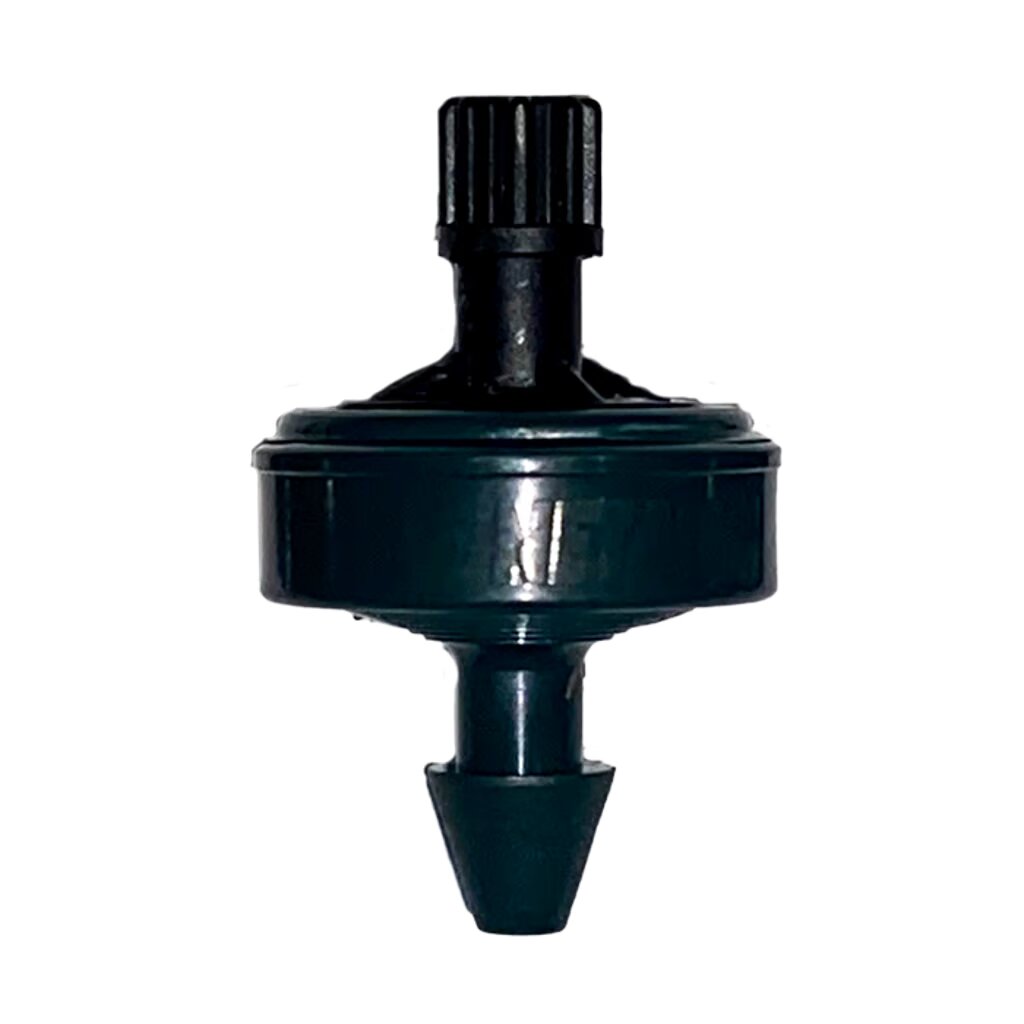
Netafim Woodpecker Pressure Compensating Junior Dripper Nipple Outlet
Netafim Woodpecker Pressure Compensating Junior Dripper Nipple Outlet
Out of stock
Couldn't load pickup availability
Payment options
Netafim Pressure Compensating Dripper for Precision Irrigation
Note: Woodpecker Pressure Compensating Junior Dripper pairs with Netafim MOD (Multi-Outlet Dripper) w/ (Short) Angle Arrow Dripper
The Netafim PCJ dripper, or "Woodpecker Jr." is the world's leading pressure compensating dripper both in quality and number of installations. The advanced PC design of the Netafim emitter gives a uniform and accurate flow rate over a wide range of input pressures. A built-in CNL check valve shuts off flow when pressure drops below a preset value, preventing lines from draining to their lowest point. Finally, the precision-molded flow channel is highly resistant to clogging. Use Netafim PCJ drippers when you need accurately controlled water application.
While the picture shown is identical to the barbed variant due to limited photo resources at this time, they are different products and we apologize for the confusion.
FEATURES AND BENEFITS
- Wide water passages, improves clogging resistance.
- PC system, patented pressure differential system maintains uniform flow rate at different inlet working pressure (in the recommended working pressure range), ensuring exact distribution of the water and nutrients.
- Continuous self-flushing system, improves resistance to clogging.
- Anti drain (CNL) system, optional model, eliminates drainage and refill effect, improves efficiency in pulse irrigation.
- Number of emitters can be increased so as to increase water quantity supply aimed at meeting tree growth rate requirement.
- Allows the installation of “spider assembly”, splitting the water supply to a number of outlets and/or PC spray stake units.
SPECIFICATIONS
- Working pressure: 1.0 to 4.0 bar (1.3 to 4.0 bar in the 40 l/h).
- Large water passages.
- Recommended filtration: 130 micron / 120 mesh.
Filtration method is to be selected based on the kind and concentration of the dirt particles existing in the water. Wherever sand exceeding 2 ppm exists in the water, a Hydrocyclone is to be installed before the main filter. When sand/ silt/ clay solids exceed 100 ppm, pre treatment will be applied according to Netafim™ expert team’s instructions.
- 5 different flow rates.
- 3 different outlets: nipple, barb to 3 mm ID and barb to 4 mm ID. micro-tube.
- To be “inserted” into thick- walled pipes (0.90, 1.00, 1.20 mm).
- Injected emitter, very low CV.
- Injected silicon diaphragm.
- Fast Delivery
- Easy Returns
- Secure Checkout
Share


INFORMATION QUESTIONS
FREQUENTLY ASKED QUESTIONS
What is Hydroponics?
Hydroponics is the science of growing plants without soil. The plants thrive on the nutrient-water solution alone. The growing medium merely acts as a support for the plants and their root systems while the solution passes freely. The growing medium, if any, is totally inert.
What types of plants grow best hydroponically?
Anything can be grown hydroponically, but some plants prove to be more space efficient. Some plants we suggest are tomatoes, sweet peppers, hot chilies, lettuce, spinach, squash, cucumbers, broccoli, beans, snow peas, herbs and flowers of all types.
Can you REALLY get better yields/quicker growth?
Absolutely. The plants, when receiving everything they need, tend to be healthier, faster growing and generally more productive. You can expect 30% faster growth with many crops.
What are the watering cycle timelines hydroponic systems?
Once the reservoir is filled with nutrients, it is time to put your hydro system to work! The ease of hydroponics is automation – automation is achieved by putting the pump on a timer according to your watering needs. The watering cycle depends on growth stage, growing medium and hydroponic system. In an ebb and flow or drip system with rockwool as the medium, seedlings, clones and plants in the early vegetative stage require watering only once a day for 15-30 minutes (twice a day for higher temps). Mature, flowering and fruiting plants require a heavier feed and can be fed once a day for 30 minutes (twice a day for higher temps). Typically soiless mixes and coco fiber can be watered for about 15 minutes twice a day, and can be adjusted for heavier feeding during the flowering and fruiting stage or higher temps. ViaStone, Hydroton, Grow Rocks, and Silicate mediums need to be watered more frequently – a constant drip for drip systems, and about 15-30 minutes every 3 hours for ebb and flow systems and can be adjusted for heavier feeding during the flowering and fruiting stage or higher temps. Aeroponic systems require frequent watering cycles; 30-60 seconds every few minutes or a constant spray.
What do I need to test pH? How do I test pH?
pH has a range from 0 (acidic) – 14 (alkaline), with 7 being neutral. A proper hydroponic pH range is between 5.5 to 6.2 for most hydroponic crops. For specific crop pH, check out our Plant Guide. pH must remain within the proper range for good plant health, disease resistance, and proper nutrient uptake. pH is maintained by adding pH Up and pH Down to the nutrient solution. For more information, see the Testssection of our site.
How will the flavor compare to my outdoor grown, organic produce?
The taste may be even better! This is simply due to the fact that the hydroponically grown plants are getting everything they need, when they need it. Don’t be fooled by “hot house” produce grown commercially. The grower’s primary concern is shipability and storage, not flavor. When you grow your own vegetables at home, you can expect nothing less than excellent results. Plus, hydroponically grown produce has the added benefit of a longer shelf life.